Mobile Equipment Coverage for Remediation Sites
By Josh Cotner
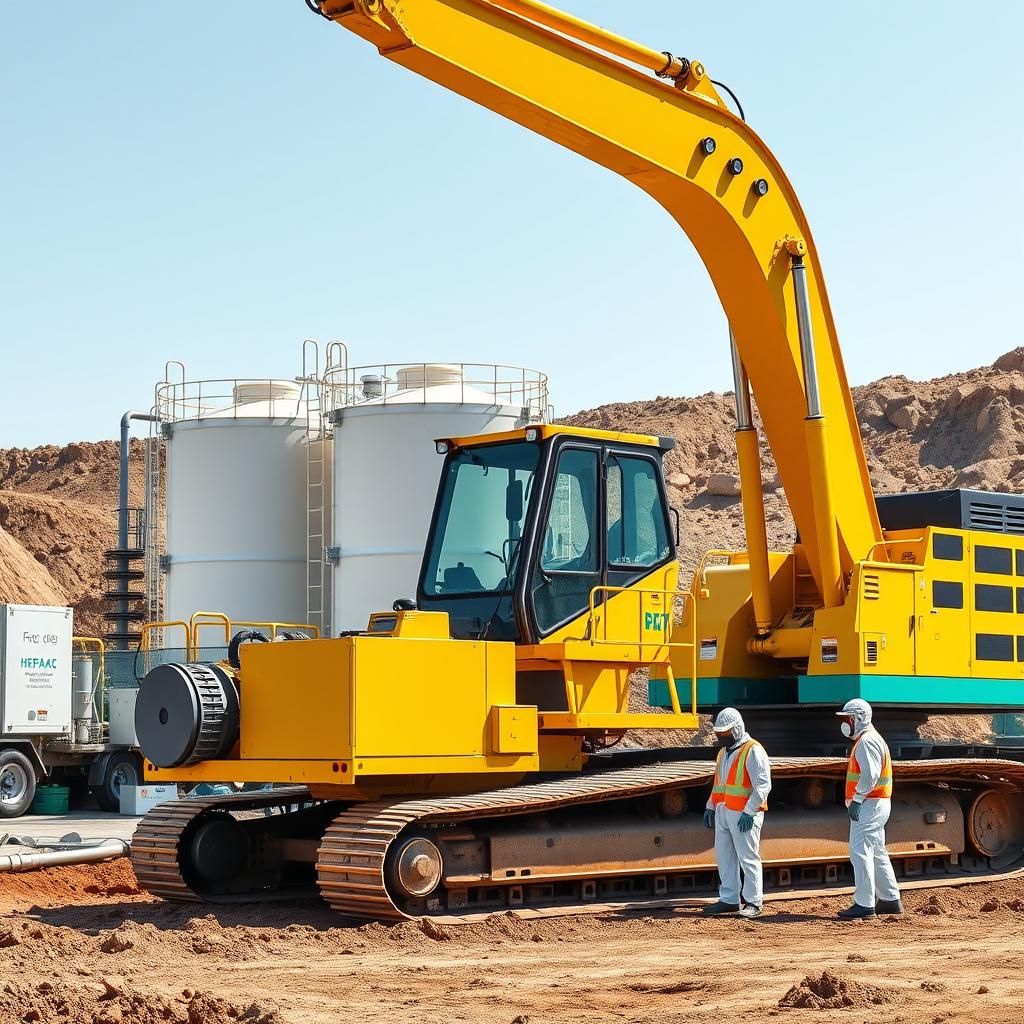
Environmental remediation contractors run on specialized equipment — excavators, frac tanks, HEPA vacuums, negative-air machines, air monitors, treatment trailers, and confined-space gear. That equipment travels between sites daily, sits in staging yards, and gets loaded onto trailers. When it's stolen, overturned, or damaged in transit, general liability and commercial property won't pay. You need an inland marine (mobile equipment) policy.
Here's how it works and what to buy.
Why GL and property don't cover your equipment
This is the most common gap we see. Environmental contractors assume their equipment is covered somewhere in their existing program. It usually isn't:
- General liability covers third-party bodily injury and property damage — not your own equipment.
- Commercial property covers gear at a fixed location (your yard or shop) — not at jobsites, in transit, or staged off-site.
- Commercial auto covers the vehicle, and liability for an at-fault crash — but not the contaminated cargo or the equipment being hauled.
Mobile and specialty equipment that travels is an inland marine coverage. It follows the gear wherever it goes — which is exactly where remediation equipment actually lives and gets damaged.
What to schedule on a mobile equipment policy
A thorough inland marine program for an environmental contractor typically schedules:
- Excavators, loaders, and heavy mobile equipment
- Frac tanks, storage tanks, and roll-off boxes
- Treatment trailers, filter presses, and process equipment
- HEPA vacuums, negative-air machines, and air scrubbers
- Air monitors, gas detectors, and sampling equipment
- Confined-space entry gear, respirators, and PPE
- Compressors, generators, and support equipment
We build a schedule listing each major item and its replacement value, and you can update it as you add or rent gear.
Replacement cost vs. actual cash value
This is the single most important coverage decision on an equipment policy. We write mobile equipment at replacement cost so a stolen excavator or damaged HEPA vac is replaced new — not depreciated to pennies on an actual-cash-value (ACV) basis. For expensive remediation gear, ACV can leave you tens of thousands of dollars short of actually replacing the equipment, and that means a stalled project and out-of-pocket spend.
What perils are covered
A well-structured inland marine policy covers:
- Theft from jobsites, trucks, trailers, and yards — the most common equipment loss
- Overturn and collision, including during loading and unloading
- Transit damage while moving between sites
- Fire, wind, vandalism, and other named perils
- Optional rented and borrowed equipment extensions
The rental exposure
Environmental contractors rent a lot of gear — large excavators for a dig, frac tanks for a treatment system, specialty monitoring equipment for a characterization phase. Your mobile equipment policy can extend to rented and borrowed equipment, which matters because rental contracts often push the loss exposure onto the renter. Tell us what you rent and we'll structure the coverage so a damaged rental doesn't come out of your pocket.
How the contaminated cargo fits in
A frequent confusion: mobile equipment coverage is for the equipment, not the contaminated load in your vacuum truck or tanker. Hauling contaminated soil, liquids, or waste is a separate exposure that needs:
- Commercial auto rated for hazmat hauling
- A motor truck cargo / pollution extension or CPL transportation coverage for the load itself
We coordinate all three — equipment, vehicle, and cargo — so the full chain is covered.
How premium is calculated
Mobile equipment premium is based on:
- The scheduled value of each item
- The type of equipment (heavy iron vs. portable gear)
- Geographic area and transit radius
- Security and storage practices (fenced yards, locks, GPS tracking)
- Your claims history
Good security — fenced and lit yards, equipment tracking, secure transport — improves both terms and price.
How fast are claims paid?
Once you provide a police report (for theft) and the equipment schedule, inland marine claims typically pay quickly so you can replace or repair gear and get back to work. We help you document to keep the claim moving — because a stalled excavator means a stalled project.
Coordinate it with the rest of the program
Mobile equipment is one piece of a complete environmental contractor program, alongside CPL, GL, professional liability, workers' comp, commercial auto, property, and umbrella/excess. Placing it all with one coordinated broker avoids gaps and overlaps.
The bottom line
If your excavators, frac tanks, HEPA vacuums, and monitors are the backbone of your operation, they deserve coverage that follows them wherever they go — at replacement cost, with theft and transit covered. That coverage is inland marine, and it's one of the most overlooked gaps in environmental contractor programs.
Want us to schedule your equipment and quote the coverage? Get a quote — we'll build the schedule and show you the price.
Need this coverage for your crew?
Get a real quote in about 15 minutes — we shop A-rated environmental specialty markets.