Asbestos & Mold Abatement Workers' Comp Explained
By Josh Cotner
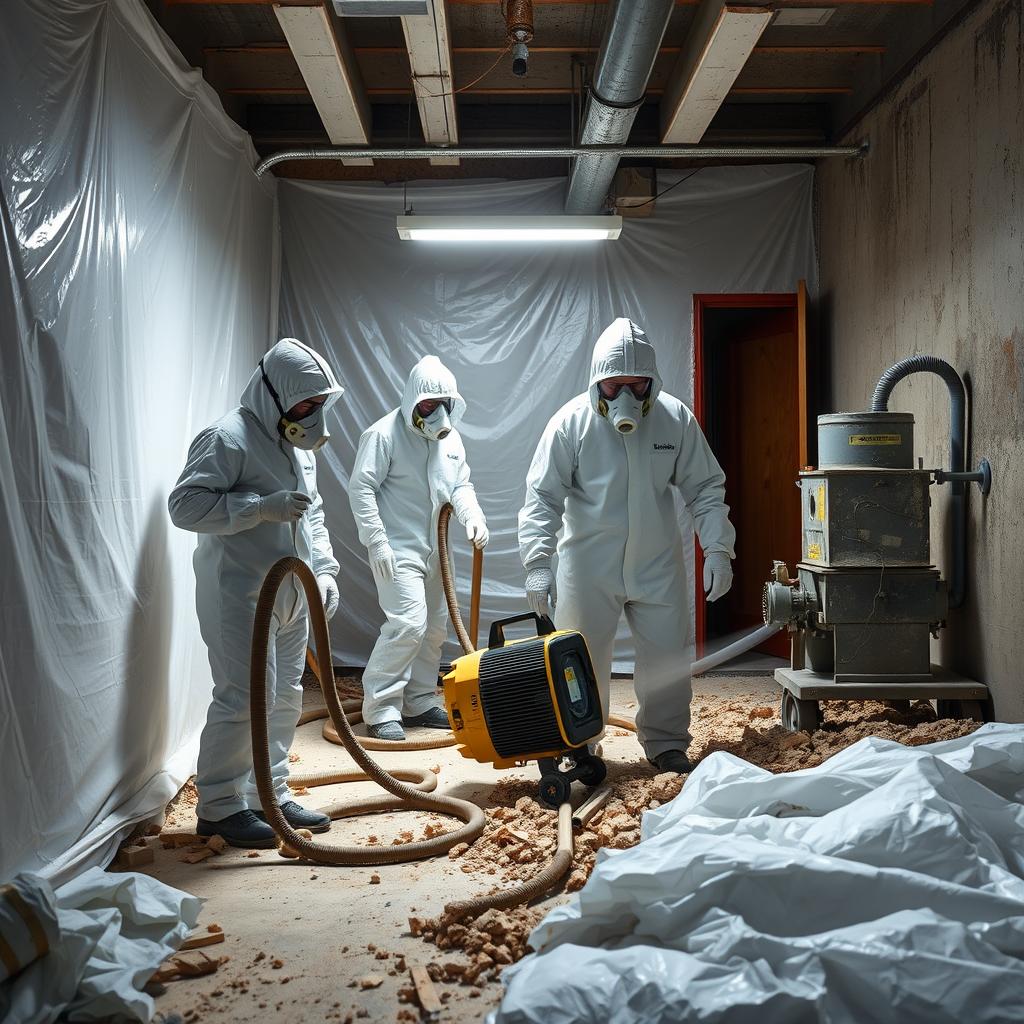
Environmental abatement crews do some of the most hazardous work in construction. Asbestos, mold, and lead abatement expose workers to respiratory hazards, biological and chemical agents, confined spaces, and heat stress — and the workers' compensation policy that covers them has to be structured around the right class codes and a documented exposure-control program. Here's how it works.
Why abatement workers' comp is different
Office workers are cheap to insure because their injury exposure is low. Abatement crews are the opposite: they handle known carcinogens (asbestos), neurotoxins (lead), and biological contaminants (mold) inside containment areas, often in full PPE and respirators, in heat, and in confined spaces. The injury and illness exposure — including latent occupational disease — is real and priced accordingly.
That's why abatement workers' comp is rated on specific class codes, not generic "construction" codes. Getting the codes right is the difference between a fair premium and an audit disaster.
The class codes that apply to abatement work
Workers' comp classification varies somewhat by state (NCCI states vs. monopoly state funds like Ohio and Washington), but the most common codes for environmental abatement include:
- 5473 — Asbestos Abatement (and often used more broadly for hazardous-material removal)
- 5474 / 5403 with lead endorsement — Lead Abatement (state-dependent)
- 5403 or a specialty mold code — Mold Remediation
- 6232 / 9015 — Hazardous waste handlers and treatment operators
- Codes for confined-space entry, sampling, and laboratory work where applicable
Correct classification matters for two reasons. First, the rate per $100 of payroll differs dramatically between codes — mis-classing abatement crews as generic construction can mean overpaying (worst-case rating) or underpaying (and getting a big audit bill at policy end). Second, if a claim happens and the work was mis-classified, the carrier can challenge coverage.
How the premium is calculated
Workers' comp premium for abatement crews is built from three inputs:
- Payroll by class code — every dollar of W-2 wages, assigned to the right code
- The class code rate — set per $100 of payroll, varying by state and code
- Your experience modifier (X-mod) — a credit or debit factor based on your claims history vs. industry average
A clean X-mod is the single biggest lever you have on price. A documented safety program, a real respirator program, confined-space entry procedures, and aggressive claim management all push the X-mod down over time.
Latent disease: the long-tail exposure
The other thing that makes abatement workers' comp different is latent occupational disease. Asbestos-related conditions, in particular, can surface years or decades after exposure. Those claims are complex — they often involve multiple employers and long latency periods — and the rules for which policy responds vary by state.
A well-structured program documents your exposure controls (respirator fit-testing, air monitoring, decontamination procedures) so that, if a disease claim ever arises, your operation has the records to support appropriate handling. We help you build that documentation into the program from day one.
Owner-operators and elective coverage
Many states exempt sole proprietors and single-member LLC owners from mandatory workers' comp coverage on themselves. But abatement work is hazardous enough that we usually recommend owners elect coverage anyway — and if you have any W-2 employees, state law requires you carry it. We'll tell you exactly what your state requires.
Subcontractors and the misclassification trap
If you use 1099 subcontractors, watch out. Many states apply a "statutory employee" test, and if a sub is really functioning as an employee, you can be held liable for their injuries — and your workers' comp carrier may charge premium for them at audit. We help you classify workers correctly, document the relationship, and require subs to carry their own coverage and name you additional insured.
What to do when a claim happens
The first hours after an abatement injury matter a lot. We respond within 2 hours, make sure the injured worker gets care fast, document the exposure, and manage the claim with the carrier to control cost and get the crew member back to work. Good claim handling protects both the worker and your experience modifier — and a well-managed claim costs less than a poorly managed one.
How to keep your abatement workers' comp cost down
- Classify correctly — asbestos, mold, and lead codes for the right work
- Document your respirator and exposure-control program — it supports better rates
- Invest in safety — confined-space procedures, air monitoring, decontamination protocols
- Manage claims aggressively — early reporting, fast care, return-to-work
- Report payroll accurately — avoid the audit surprise at policy end
- Use a specialty broker — one who knows the environmental markets and class codes
The bottom line
Abatement crews deserve a workers' comp program built around their actual exposure — the right class codes, a documented safety and respirator program, and a broker who manages claims aggressively. Generic construction coverage mis-prices the risk and mishandles the claim.
Want a workers' comp quote for your abatement crew, properly class-coded? Get a quote — we'll show you what your real exposure should cost to insure.
Need this coverage for your crew?
Get a real quote in about 15 minutes — we shop A-rated environmental specialty markets.